
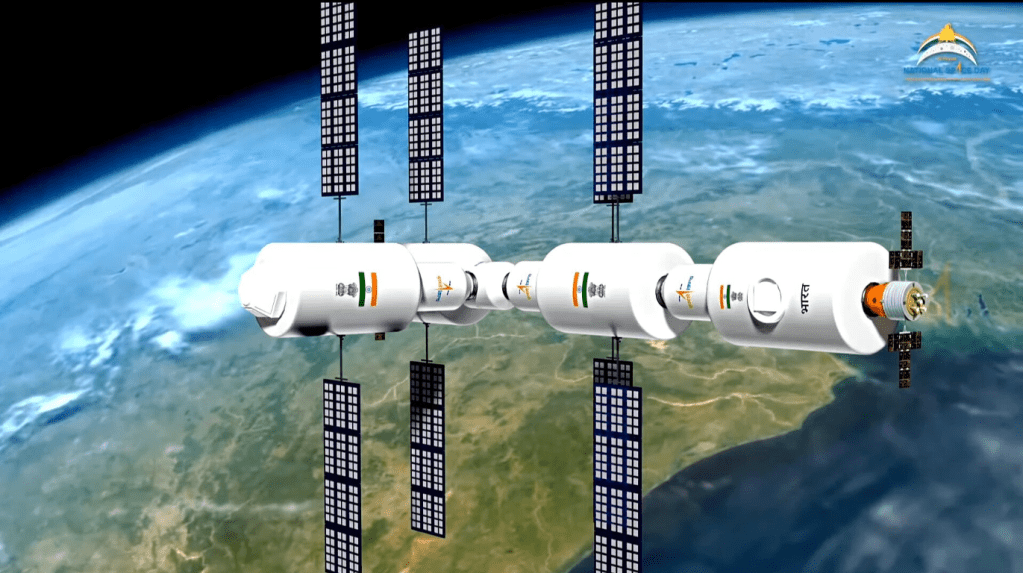
India’s space agency, ISRO, has accomplished a groundbreaking feat by successfully docking satellites in space, a capability previously mastered only by the United States, Russia, and China. This landmark achievement underscores India’s growing prowess in space technology and marks a significant step toward future autonomous space missions.
The mission, known as SpaDeX (Space Docking Experiment), faced multiple delays as ISRO meticulously worked to ensure precise alignment of the satellites, avoiding potential mishaps. After several trial maneuvers and adjustments, the final docking was achieved seamlessly, showcasing ISRO’s advanced technical capabilities. The agency proudly announced its ability to control the docked satellites as a single entity, a key milestone in space exploration.
SpaDeX Mission: A Detailed Overview
Launched aboard ISRO’s trusted PSLV rocket on December 30, 2024, the SpaDeX mission initially planned the docking for January 9. However, challenges in maintaining the exact distance between the two satellites led to postponements. Today, the mission achieved success at an altitude of approximately 470 kilometers above Earth.
The two spacecraft, each weighing about 220 kilograms, are identified as SDX01 (Spacecraft A, the “Chaser”) and SDX02 (Spacecraft B, the “Target”). Initially positioned 5 kilometers apart in orbit, ISRO scientists meticulously maneuvered the satellites over a period of 10-14 days, reducing the distance to within 3 meters before executing the docking. The docking mechanism, designed for precision, operates at a slow speed of 10 mm/s and incorporates a compact design with two motors and a diameter of 450 mm, smaller than the standard International Docking System Standard (IDSS).
Scientific Objectives and Technological Advancements
The SpaDeX mission has broad scientific and technological goals. Spacecraft A is equipped with a High-Resolution Camera, while Spacecraft B carries a Miniature Multispectral Payload and a Radiation Monitor. Together, these payloads will provide high-resolution imagery, monitor natural resources, and study vegetation. This data will support various scientific endeavors, including environmental monitoring and agricultural research.
SpaDeX also demonstrates India’s capability for autonomous rendezvous, docking, and undocking in space—a critical technology for future missions involving space stations, in-orbit refueling, and satellite servicing. The mission aligns with ISRO’s long-term vision of enhancing India’s capabilities in space exploration and interplanetary missions.
Significance of the Achievement
With this successful docking, ISRO has cemented its position among the global leaders in space technology. This achievement not only strengthens India’s credentials in advanced space operations but also paves the way for ambitious projects, such as human spaceflight missions and collaborative international ventures.
Key Takeaways
- Historic Achievement: ISRO’s successful satellite docking makes India the fourth country globally to master this advanced capability.
- Meticulous Execution: The SpaDeX mission overcame challenges through precise trial maneuvers, ensuring seamless docking at 470 kilometers above Earth.
- Technological Innovation: The mission showcases cutting-edge systems, including a compact docking mechanism and advanced payloads for scientific research.
- Future Prospects: SpaDeX lays the foundation for autonomous space missions, including satellite servicing and potential human spaceflight endeavors.
This accomplishment underscores ISRO’s dedication to pushing the boundaries of innovation, solidifying India’s reputation as a key player in global space exploration.




 JustRandoms
Leave a comment